TroutSpotter x OnWater
Designing 0 → 1 for an AI powered wildlife conservation feature within a GPS app.
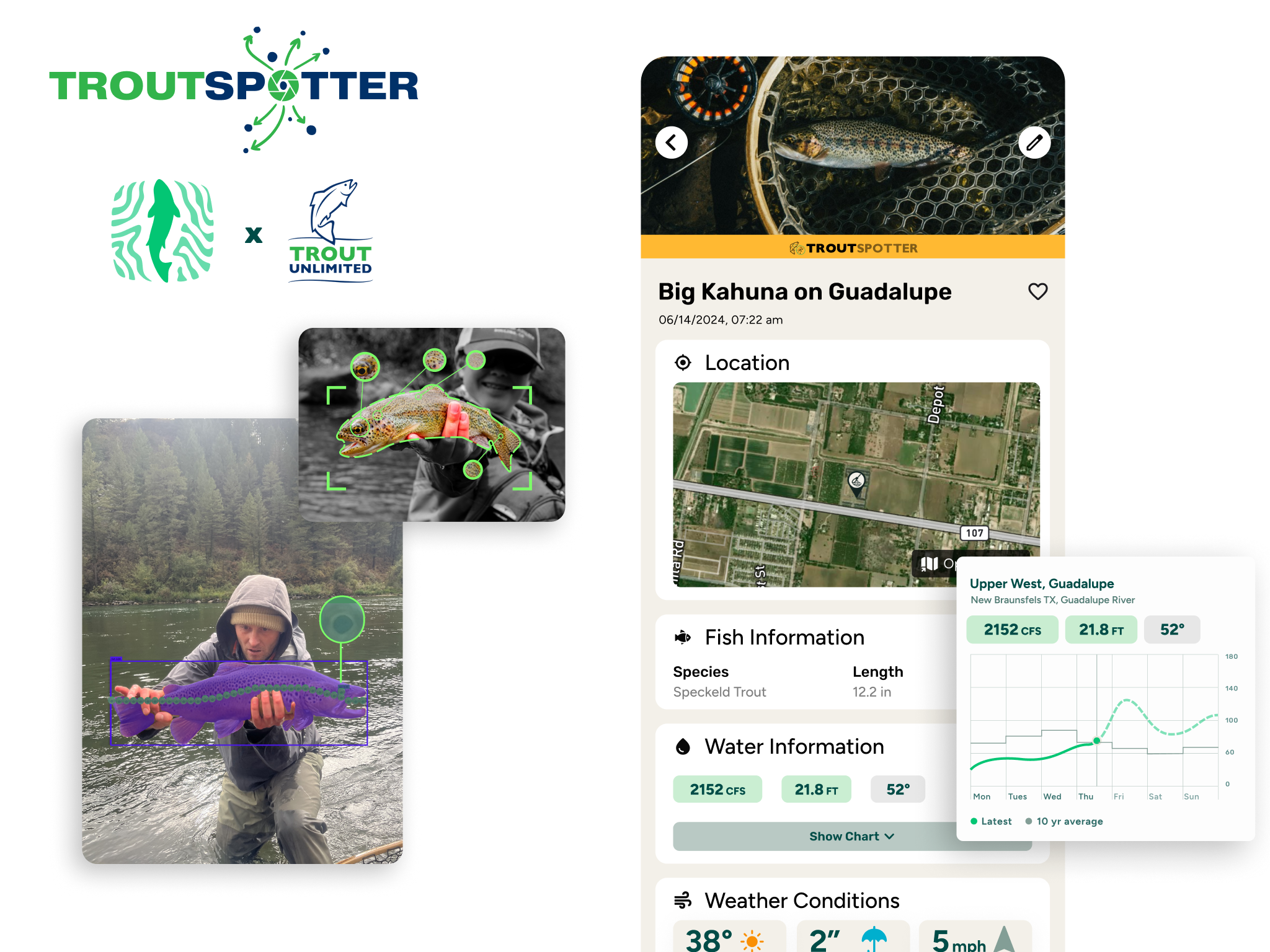
Built a platform to capture 21,900 citizen science submissions.
14,000 submissions led to a successful ID for a unique trout.
The Trout Spotter program is an AI-powered feature.
Using machine learning (in partnership with various conservation organizations) to identify individual trout from photos based on unique spot/body patterns.
Lead UX/UI Designer
Usability Researcher
Development Team
Trout Unlimited Scientists
Marketing Team
Anglers catch trout, but lack ways to contribute meaningful data for conservation.
Traditional tagging is invasive and cost prohibitive. Fisheries science needs better individual tracking in order to understand how our waters are impacting wildlife.
Our waters and fisheries need serious help, and our current structure for citizen science just doesn't scale well. (pun intended)
OnWater users are using our journal feature consistently - It is filled with rich data that conservationalists need.
In partnership with Conservation Science, OnWater has an opportunity to create a very sticky feature that promotes genuine stewardship through the use of our app.

The IKEA effect is what helps you appreciate a product exponentially more by participating in the creation of its existence.
True to our "Every good story begins with OnWater" brand slogan, we sought to capture our users with a meaningful feature.
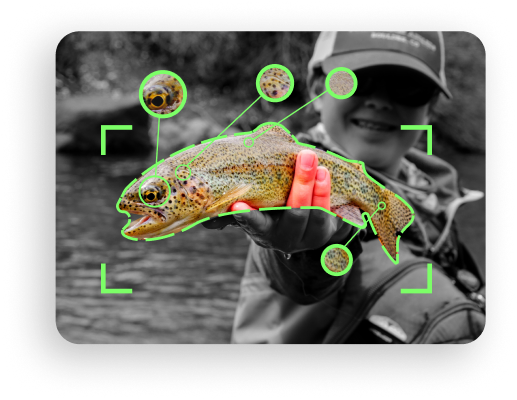
Trout have unique spot patterns, similar to the way humans have unique fingerprints?
At OnWater, we had been experiementing with the creation of AI fish identification and measuring technology.
After various workshops with multiple conservation partners, we established what data was required, relevant and sharable across all of our organizations.
This led to a deeper understanding of data dependencies within each data-set.
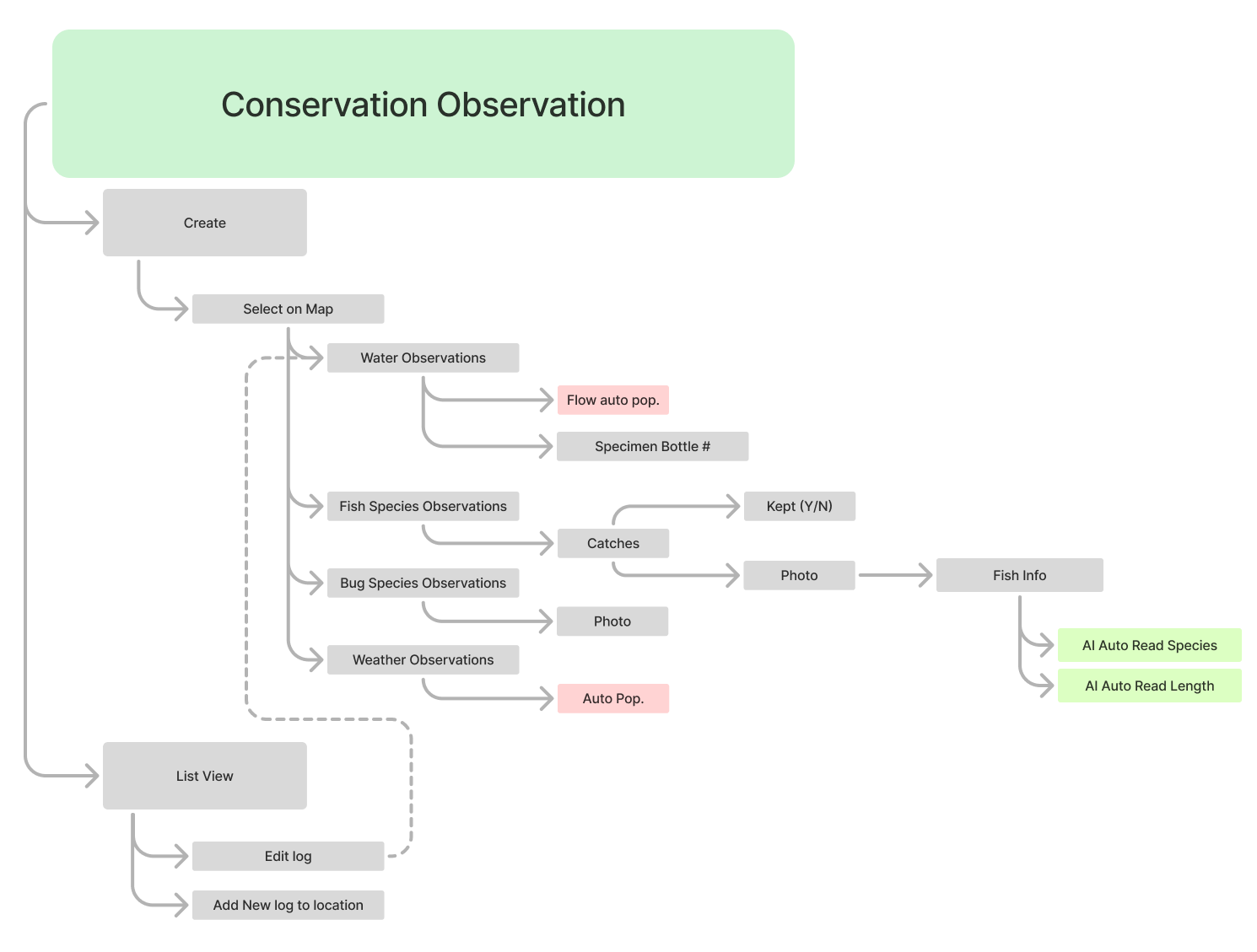
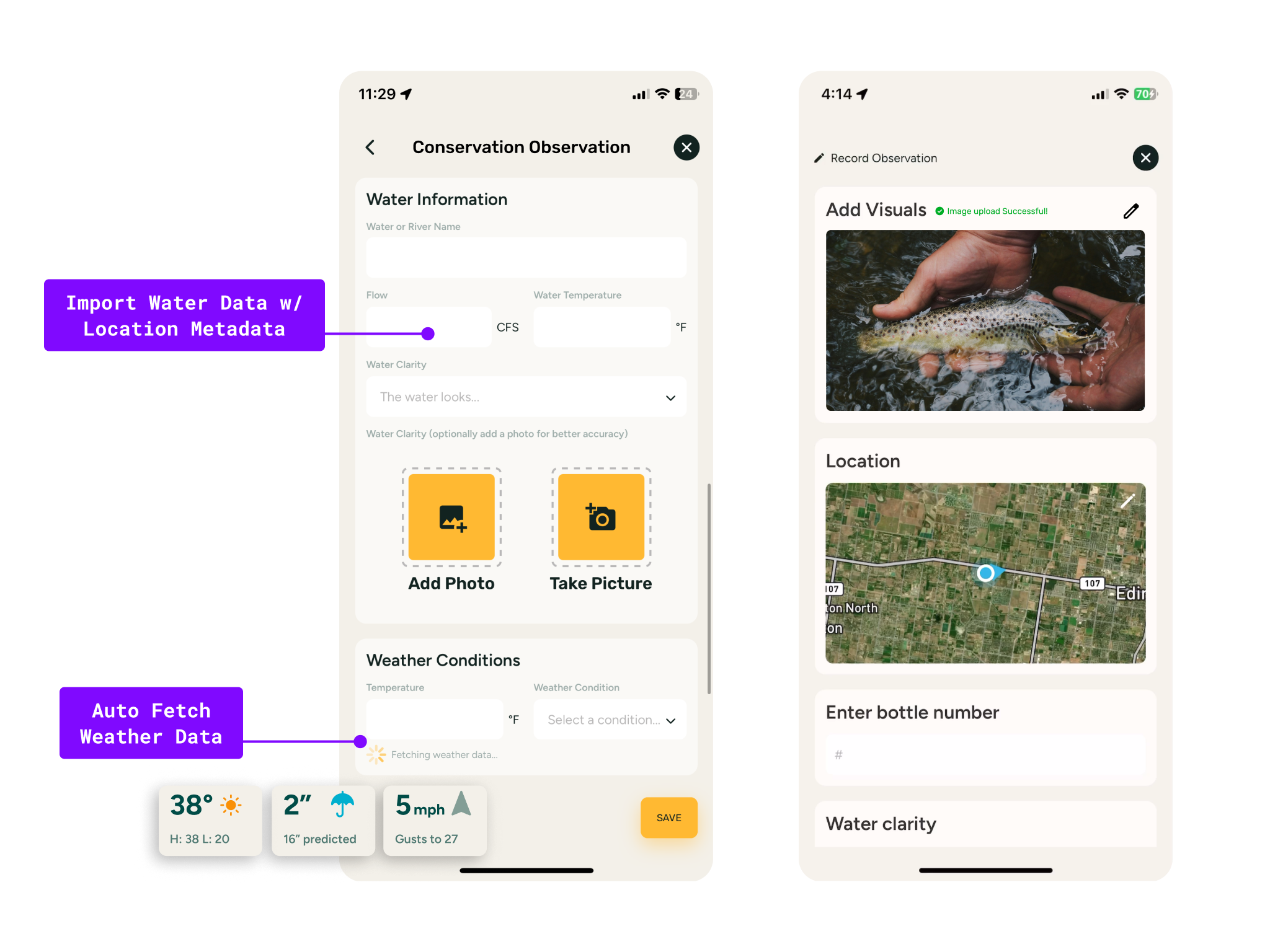
I was able to capture more users through the presentation of conditions, this capture was expanded into the catch flow.
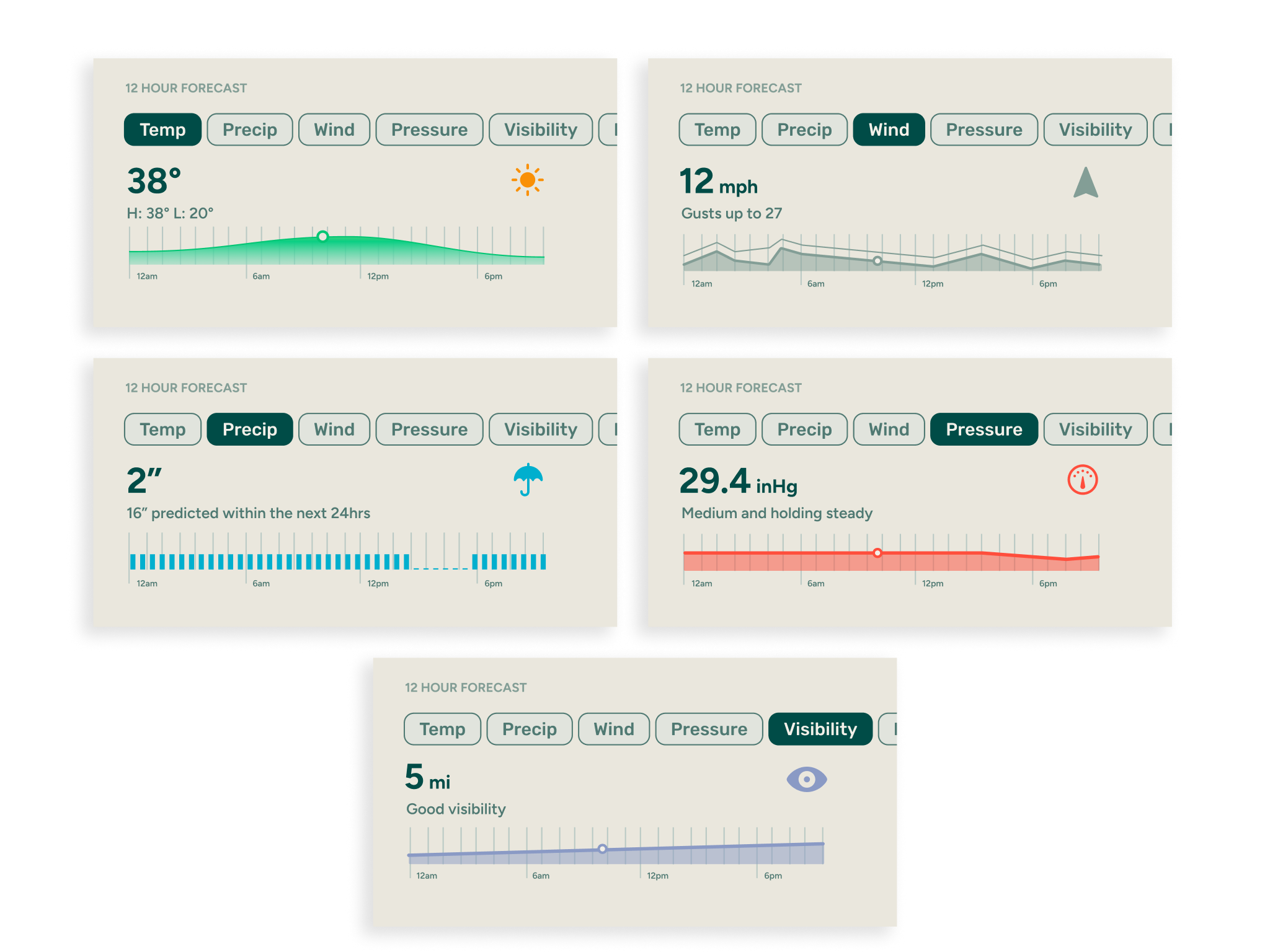
The data allowed us to beef up our platform's AI model in 3 ways.
A consideration that was paramount for this feature was not only that it worked, but it worked when users asked it to.
Within my research I found that anglers have a more strict approach to their data privacy than the average user.
Anglers hate sharing their fishing spots with others.
We wanted to signal that we were preventing HOT SPOTTING
We proved our trustworthiness by setting default to opted-out thus showing users they had a choice to opt-in and stay in control of their shared data.
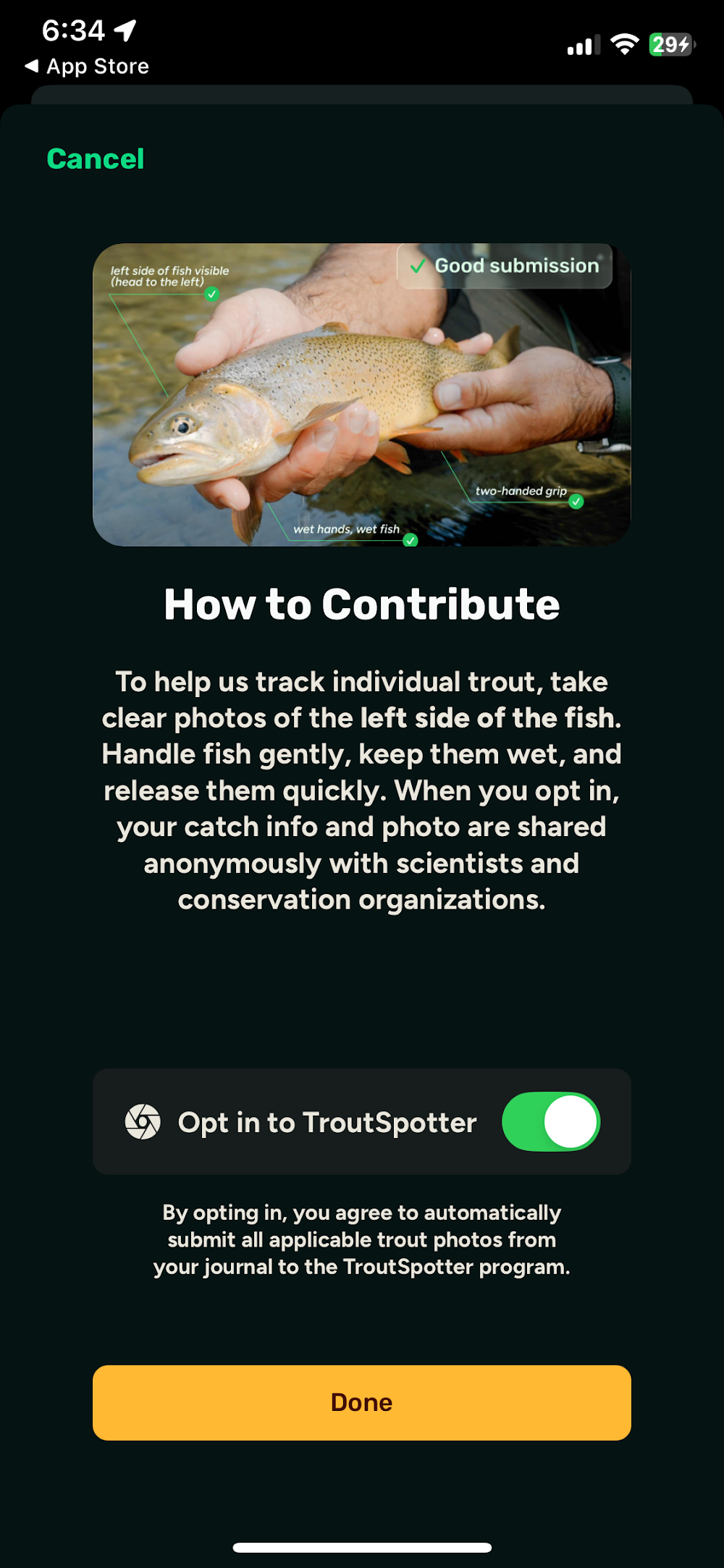
One of the challenges we faced was receiving not only a high quantity of imagery and data to train our models on, but assuring we had the QUALITY to train our models.
We made our explainers harder to ignore than a tool-tip approach.

What if users don't submit photos?
I found it amusing to capitalize on the anglers stereotypical "the fish I caught was HUGE" stories by setting the default fish image to be a tiny Crappie. Upon seeing the gallery images of their catches, they would be met with a small fish amongst their catches.

This partnership with Trout Unlimited positioned OnWater as a leader and tool that empowers conservation and recreation.. Thus opening the door for more partnerships and avenues for revenue.